
Main Water Line Problems: Repair, Replacement and Pressure Fixes
Weak pressure at every faucet, a soggy patch in the yard that never dries and a meter that spins with the house quiet all point to trouble in the line that brings water from the street to your home. This is a different job from fixing a fixture, and it starts with working out where responsibility changes from the utility to you.
Call (520) 340-7175 Common questions
- Licensed and insured plumbers
- Same-day service when available
- 24/7 emergency dispatch
How to Tell the Water Line Is the Problem
Water line trouble shows up in a few predictable ways. Pressure drops at every fixture at once, not just one. A wet or sunken area appears between the meter and the house. The meter keeps turning when everything is off. Water bills rise without a change in how the house is used. Muddy or discolored water after a repair on the street can also point to disturbed lines.
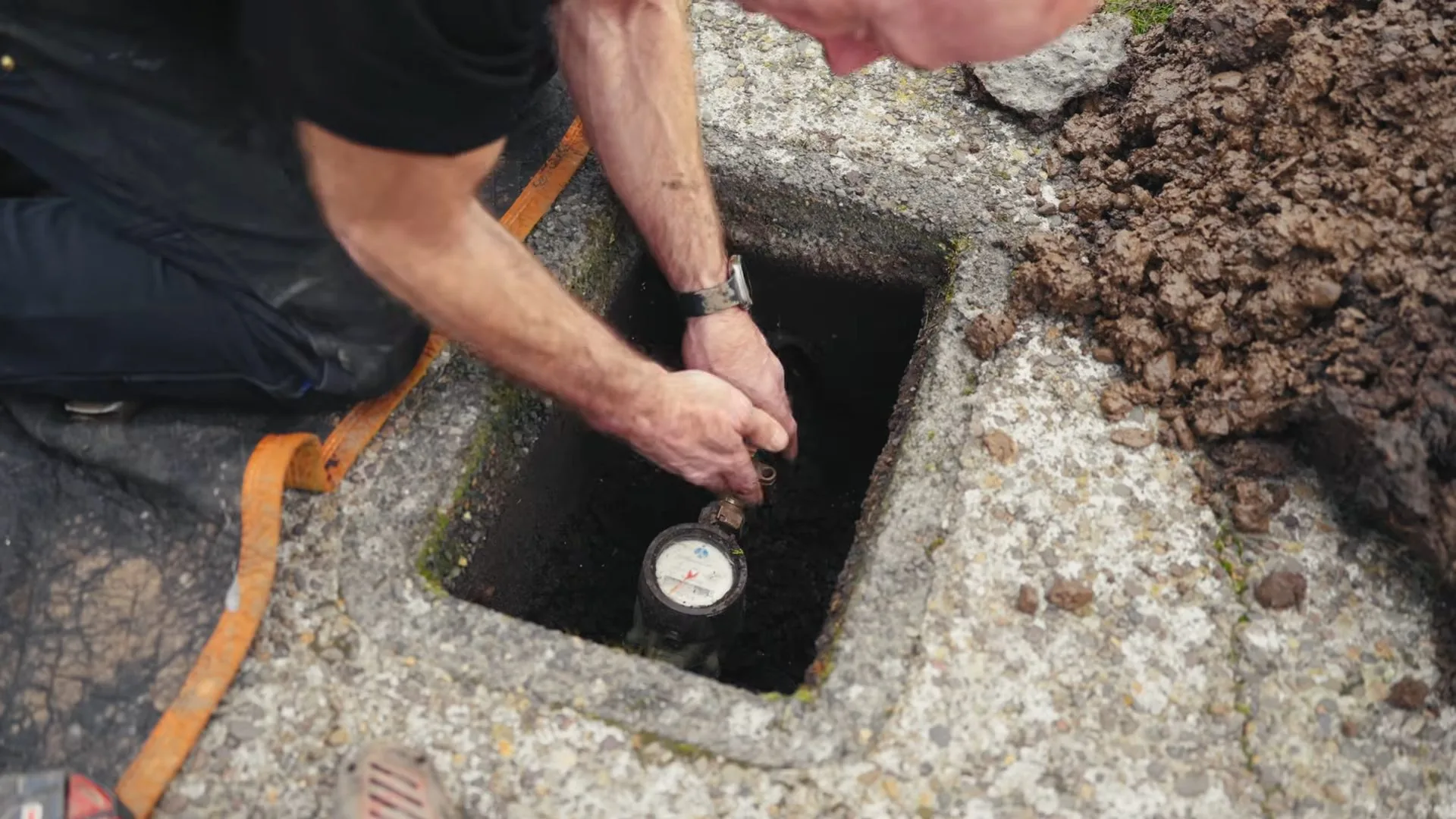
Check the meter first. Turn off all water in the house, then watch the low-flow indicator. If it spins, water is leaving somewhere. Closing the main valve at the house and checking again tells you whether the leak is on the house side of that valve or between the valve and the meter.
Where the Line Runs and Who Is Responsible
A typical home has a main line from the utility's meter to the house, usually buried in the yard. The utility owns the meter and its connection to the street, and the homeowner owns the pipe from the meter to the house. In Coolidge, Arizona Water Company supplies the water, so questions about the meter and street connection go to the utility, not to a plumber.
The plumber's work starts at the meter and ends inside the house. Knowing the boundary saves time, since a leak on the utility side is not a plumbing job. Call the utility first if the meter box itself is leaking.
Pressure low at every faucet?
That pattern points at the line, not the fixtures. Call and describe it.
Repairing a Leaking Yard Service Line
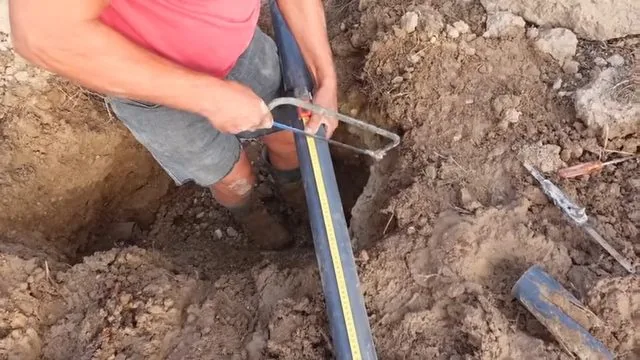
With the break pinpointed, the plumber chooses between a spot repair and replacing the run. A clean break in sound pipe can be repaired with a coupling in a small excavation. If the pipe is old, brittle or has been repaired before, replacing the whole run avoids a second dig.
Ask about the pipe material, the depth of the line and what the yard will look like afterward. Request an explanation of how the plumber will restore pressure to the house during the work. The detection methods used to locate buried leaks are on the hidden leak search guide.
Replacing the Water Line, With or Without Trenching
Full replacement installs a new line from the meter to the house, typically in copper, PEX or another approved material. A trench is the traditional method, but trenchless options pull a new line through the old path with only two access pits. Trenchless methods protect driveways, landscaping and slabs, though they do not suit every situation.
| Approach | Disturbance | Good fit |
|---|---|---|
| Trench replacement | Open trench across the yard | Short runs, easy digging |
| Trenchless replacement | Two small pits | Long runs, hardscape to protect |
Permits are often needed for work on a main line, and the plumber should explain which apply.
Wet patch between the meter and the house?
Close the main valve and call. A plumber will locate the break before any digging.
Pressure Problems: Regulators, Shut-Off Valves and Low Flow
A pressure reducing valve, usually found where the line enters the house, keeps water at a safe pressure. When it fails, pressure can swing too high and strain fixtures, or drop too low and trickle. Hammering pipes, leaking toilet fill valves and a water heater relief valve that drips can all trace to high pressure.
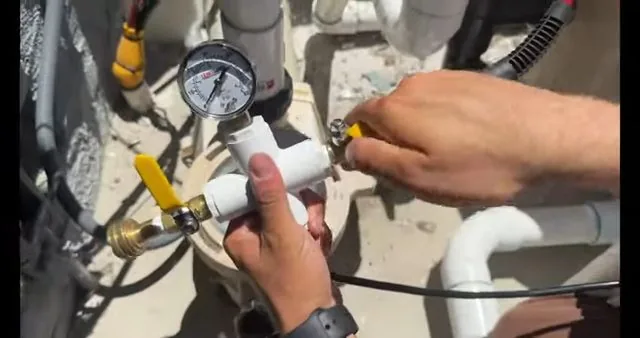
A gauge on a hose bib tells you the pressure in a minute. Readings well above the normal range call for a regulator replacement. Low readings at every tap, with a normal reading at the meter, can point to a partially closed valve, a corroded line or a failing regulator.
A main shut-off valve that will not close completely is a hazard in an emergency, and it is worth replacing before you need it.
Yard Drains, Well Pressure Tanks and Other Related Calls
Some callers describe water line problems that are really something else. A yard drain that will not clear is a drainage problem, handled on the drain service guide. A homeowner with a private well and a pressure tank has a different system from a city water customer, and the plumber should know which you have before the visit.
Describe the symptom, where the main valve and meter are, and whether anything changed recently, such as street work or new landscaping. A short, specific description speeds the diagnosis considerably.
Meters, testing and pressure
Water meter questions, line pressure testing and high-pressure complaints are handled when you call.
Water Line Questions
Why is my water pressure low at every faucet?
Low pressure everywhere points to the main line, the pressure regulator, a partly closed valve or a utility issue. One low fixture is usually that fixture, not the line.
Who fixes a leak at the water meter?
The utility owns the meter and its connection. A plumber handles the pipe from the meter to the house. If the meter box is leaking, call the utility first.
Can a water line be replaced without digging up the yard?
Often yes. Trenchless methods use two small access pits. They do not suit every line, so the plumber should explain why a method does or does not fit.
What does a pressure regulator do?
It reduces the pressure coming from the street to a level fixtures can handle. When it fails, pressure can spike or fall, causing noise, leaks or weak flow.
How can I tell if my main shut-off valve works?
Close it fully and check whether any faucet still runs. If water keeps flowing or the handle will not turn, the valve should be replaced before an emergency.
Need the water line looked at?
Share the pressure reading, the meter and any wet spots in the yard.
- Licensed and insured plumbers
- Same-day service when available
- 24/7 emergency dispatch