
Emergency Leak Repair and Hidden Leak Detection in Coolidge
A water bill that jumped, a ceiling stain that keeps growing or a faint hiss behind a wall all point to the same thing: water is escaping somewhere you cannot see. Leak detection finds the exact spot first, so the repair opens one small section instead of half a room.
Call (520) 340-7175 Common questions
- Licensed and insured plumbers
- Same-day service when available
- 24/7 emergency dispatch
Signs You Have a Leak You Cannot See
Leaks rarely announce themselves with a puddle. More often the first clue is indirect, and it helps to know which clues matter.
- The water meter keeps moving after every tap and appliance is off.
- A monthly bill climbs with no change in how many people live in the home.
- A wall, ceiling or baseboard feels damp, stained or warm to the touch.
- Flooring lifts, cups or smells musty.
- You hear running water at night when nothing is on.
The quickest home test takes two minutes. Shut off every faucet, the dishwasher and the washing machine, then read the meter and read it again after fifteen minutes without using water. Any movement means water is leaving the system somewhere between the meter and your fixtures.
How Plumbers Locate a Leak Without Tearing Open the House
Locating a leak is a process of elimination, and each step narrows the search. The plumber starts by confirming the leak exists with a meter test, then isolates which part of the plumbing is losing water. Closing off sections one at a time shows whether the loss is on the supply side, inside a wall or underground between the meter and the house.
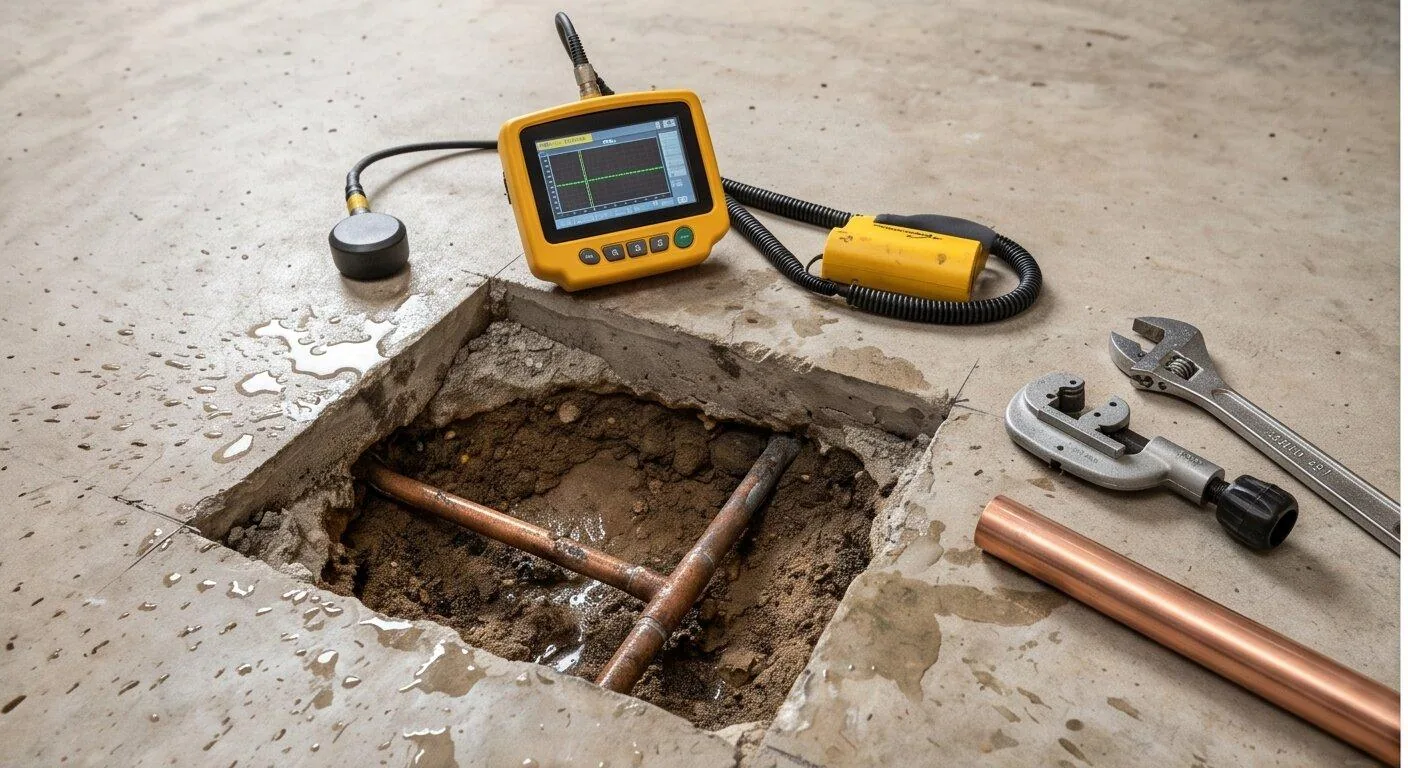
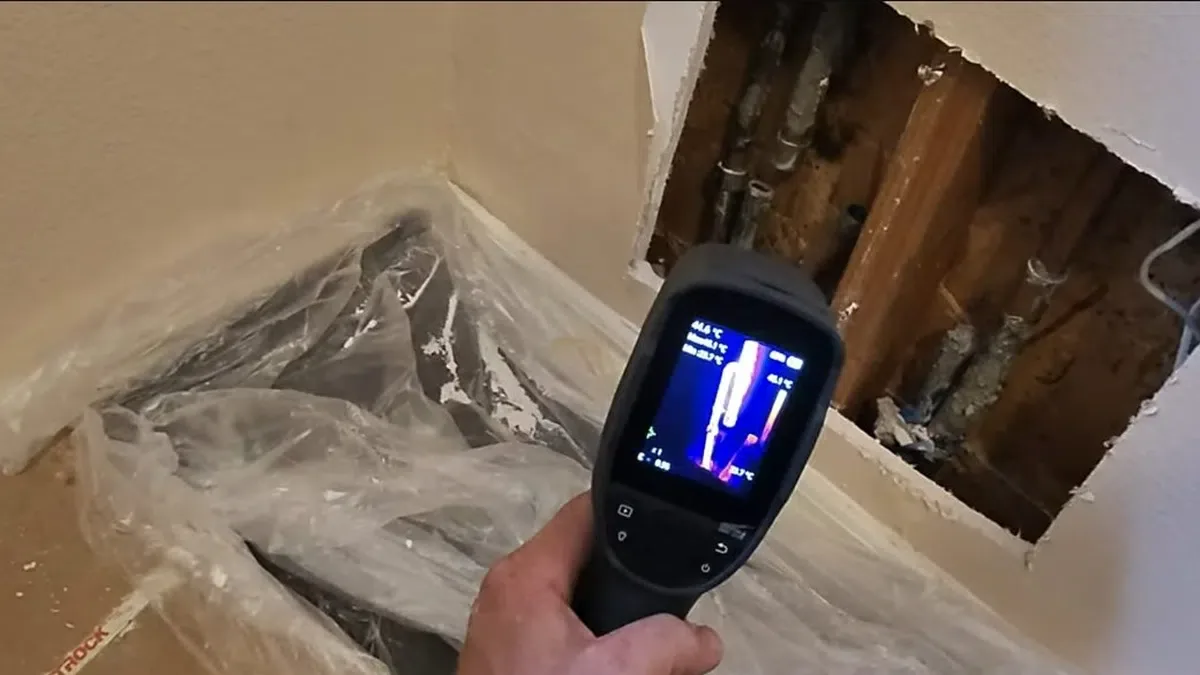
Once the section is known, tools pinpoint the spot. Acoustic equipment listens for the sound of water escaping under pressure through a pipe wall. Thermal imaging shows temperature differences where a hot line is leaking into framing or flooring. Pressure testing holds a section of pipe at a set pressure and watches whether the gauge falls. Each method suits a different pipe and a different hiding place, which is why a thorough visit usually combines two of them.
| Method | What it finds | Best for |
|---|---|---|
| Meter flow test | Whether any leak exists | First check on every visit |
| Acoustic listening | Sound of escaping water | Pressurized supply lines |
| Thermal imaging | Warm or cool patches | Hot water lines behind surfaces |
| Pressure test | Pressure loss in a section | Confirming a repaired or suspect run |
Water Leak Repair After the Spot Is Found
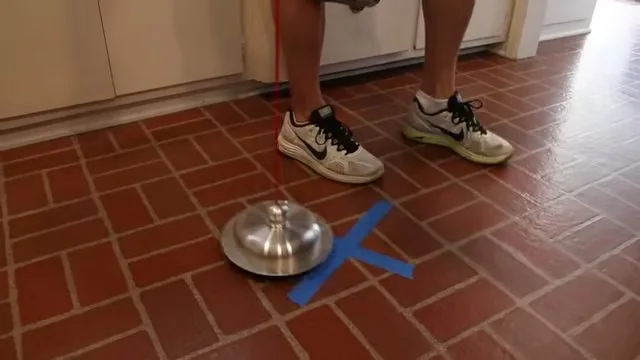
Finding the leak is half the job. The repair that follows depends on where the leak sits and what the pipe is made of. An accessible fitting may need a new connection and nothing more. A pinhole in a copper run may call for a spliced section. A line that has corroded in several places is a different conversation, because patching one spot while its neighbors are about to fail only buys a few weeks.
A plumber should explain the choice in plain terms: what failed, why, what the repair involves and what it leaves behind in the wall or floor. Ask whether the surrounding pipe shows the same wear, and ask what the access opening will look like afterward. Good answers are specific to your home, not a general pitch.
A leak does not stop on its own
Water keeps moving until someone finds the source. Dispatch answers all day and night.
Fixture Leaks: Toilets, Faucets and Showers
Not every leak hides in a wall. A toilet that refills on its own, a faucet that weeps at the base and a shower valve that drips behind the handle all waste water continuously and show up on the meter just like a buried line. Because they sit at the end of the supply, they are often the simplest leaks to stop and the easiest to confuse with something worse.
Put a few drops of food coloring in the toilet tank and wait without flushing. If color reaches the bowl, the flapper is leaking. Check under every sink for damp cabinet floors and corroded shut-off valves. A bathroom leak that stains the ceiling below it deserves a quick look at the shower pan and drain seal as well as the supply lines.
Plumbing Inspection and Pipe Condition Checks
Some homeowners call before anything is wrong. A condition check looks at visible supply lines, shut-off valves, water pressure, fixtures and the water heater connections, and it records what is aging and what is sound. Buyers use it before closing, and owners of older homes use it to decide whether a string of small repairs is adding up to a larger replacement.
Water pressure is worth testing in any inspection. Pressure that sits too high strains fittings and hoses, and pressure that sits too low can point to a restriction or a leak upstream. A plumber with a gauge can tell you which one you have in a few minutes.
Wet wall, stained ceiling or a high water bill?
Describe what you see and a plumber will plan the search before anything is opened.
Leaks Under the Slab, in Walls and Outdoors
Homes differ in what sits beneath them, and the right detection method follows the construction. Confirm first whether your home is built on a slab, over a crawlspace or on a raised foundation, because that decides where supply and drain lines run. Lines in a slab are reached differently from lines in a crawlspace, and a plumber will ask before choosing a method. A detailed look at that situation is on the slab leak page.
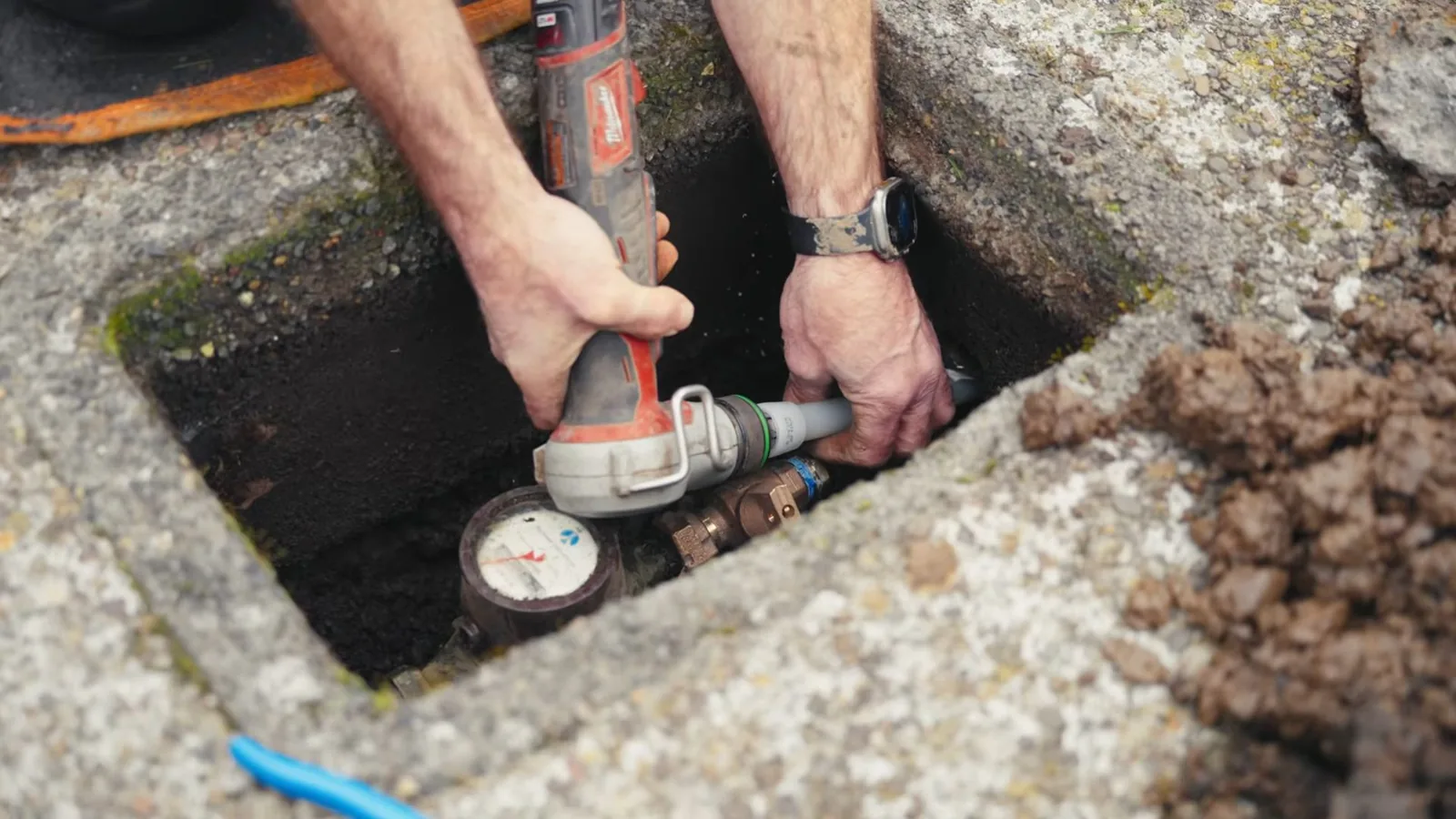
Wall and ceiling leaks often travel before they show. Water follows framing and drips from a spot some distance from the source, so the stain is where you look but not where the plumber digs. Outdoor lines, including the main between the meter and the house, are located with the same acoustic and pressure methods. Sprinkler and irrigation systems are a separate trade, so a leak that starts at a sprinkler valve may need an irrigation specialist.
What a Leak Costs You Before It Is Fixed
Water damage does not wait for a convenient time. A slow leak soaks drywall, swells cabinets and feeds mold in the dark, and the longer it runs the larger the repair becomes beyond the plumbing. If drywall or flooring has stayed damp since the leak began, tell the plumber, because drying and removal may be needed alongside the repair. The water damage page explains that side of the job.
Ask the plumber for a written note of what was found and where, with photos if possible. Your insurer may ask for documentation, and a clear record makes that conversation easier. Detail on how repair cost is decided is on the cost factors page.
Leak Detection Questions
How do I know if I have a leak or just high water use?
Shut off every tap and appliance, then watch the water meter for fifteen minutes. If the dial or low-flow indicator keeps moving, water is leaving the system. If it stays still, the higher bill likely comes from use or a seasonal change such as irrigation.
Will leak detection damage my walls or floors?
Detection tools work from the surface and do not require opening anything. Access is only opened once the plumber knows the spot, and the opening is kept as small as the repair allows.
Can I stop a hidden leak by turning off the main valve?
Closing the main stops the flow into the house, so it stops active damage while you wait. It does not repair anything, and the leak will resume once the water is back on.
Is a dripping toilet worth fixing right away?
Yes. A toilet that refills by itself can waste a steady stream of water and shows up on the meter like any other leak. The repair is often a flapper or fill valve and is a small job compared with the water lost.
Do you find leaks in irrigation or sprinkler lines?
Sprinkler and irrigation systems are a separate trade. A plumber can confirm the leak is on the irrigation side by testing the house supply, then you would call an irrigation specialist for that system.
Ready to find that leak?
Describe the symptoms to dispatch. Leak detection can start with a meter test.
- Licensed and insured plumbers
- Same-day service when available
- 24/7 emergency dispatch